
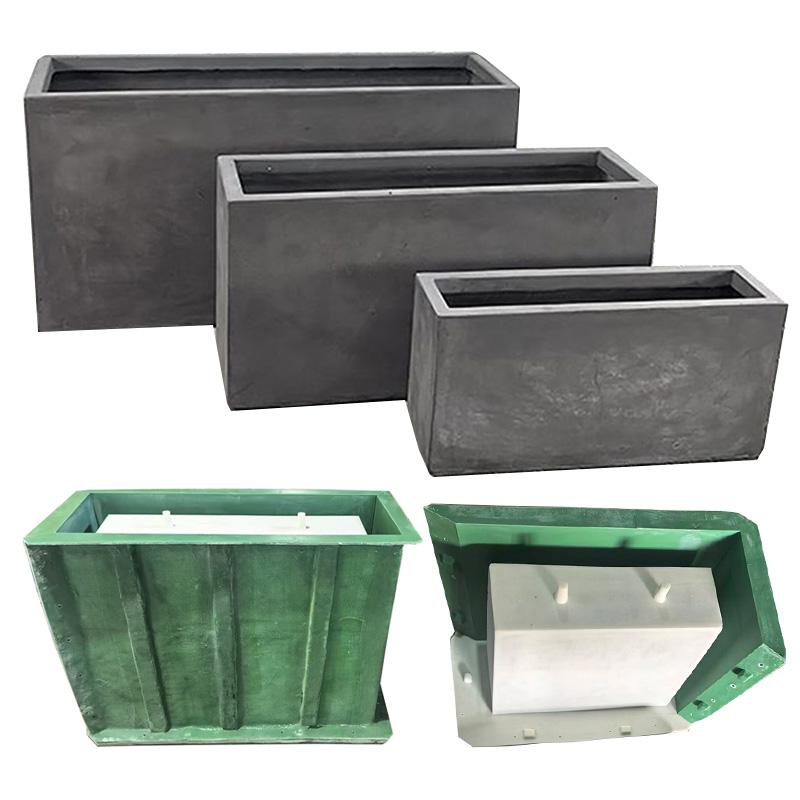
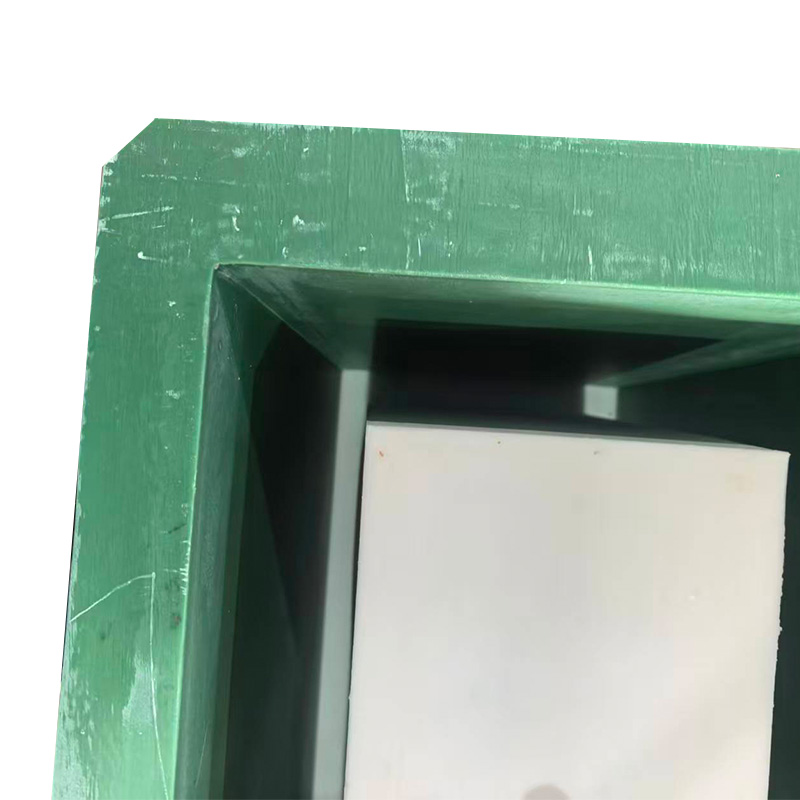
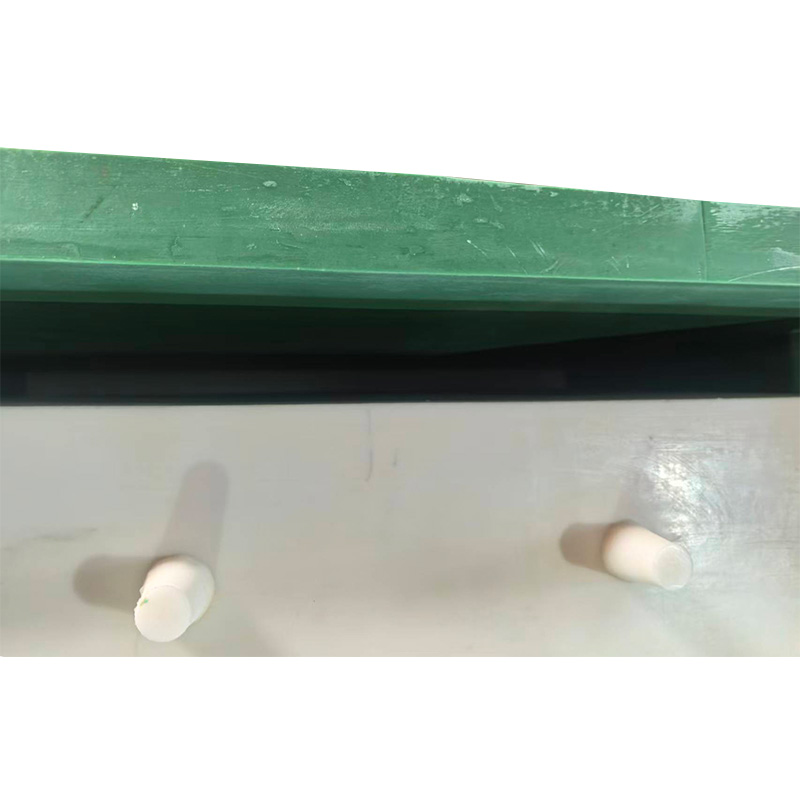
Commerical Large Concrete Rectangular Planter Molds Mordern Design

SKU 6938606880761 Categories , , , , Tag Brand:

$920.00 $3,131.00Price range: $920.00 through $3,131.00

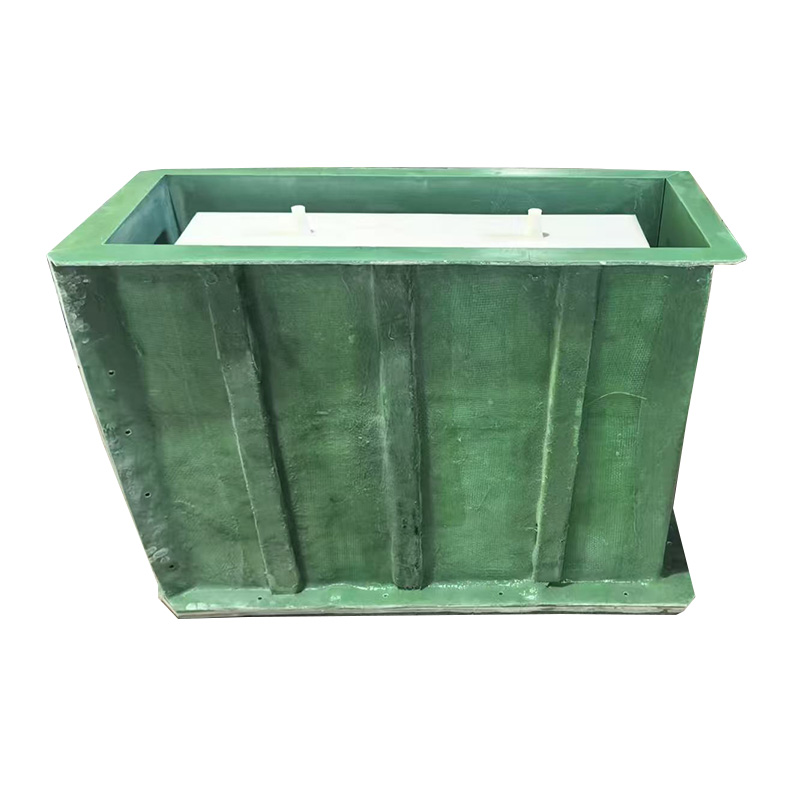
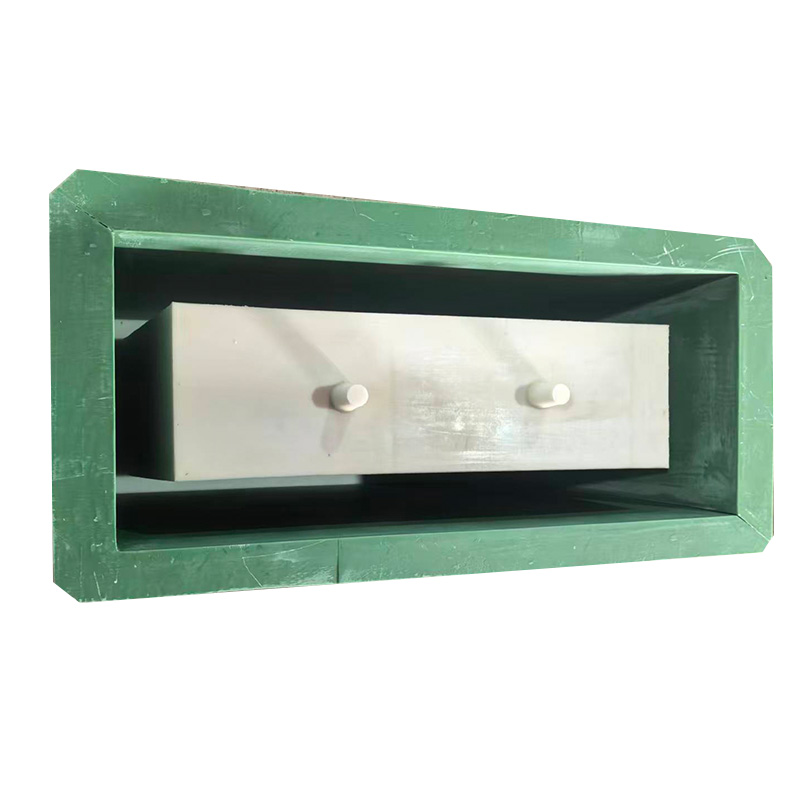
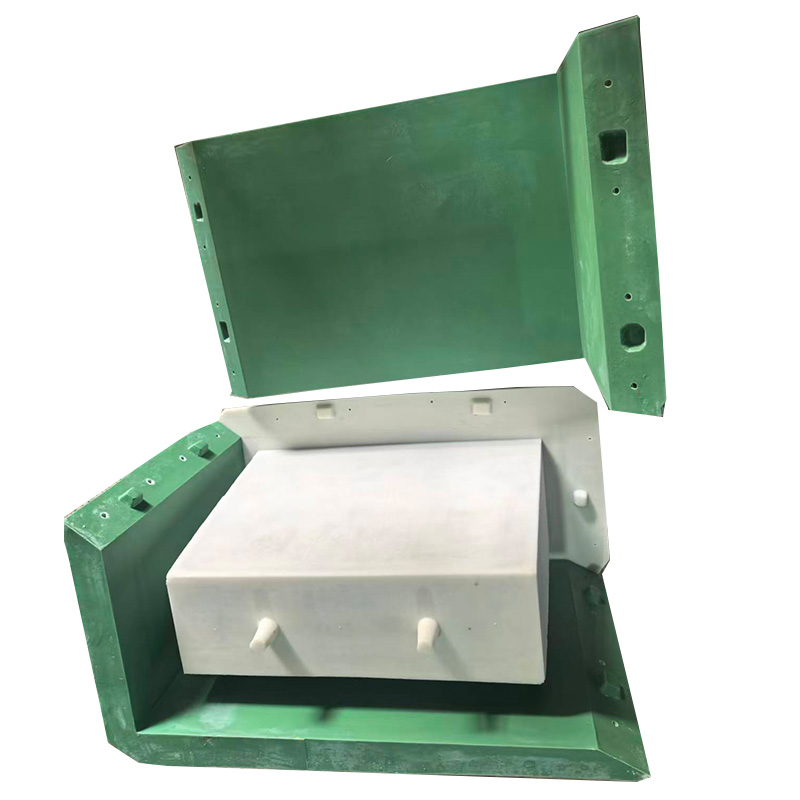
LCMOLDS custom fiberglass outshell mold with silicone inner mold for produce concrete rectangular mordern planters. Super durable materials combined, reused more than 100 times. Large size: L35 x W13 x H27 inches 60kg, Middle size: L30 x W12 x H23 inches 50kg, Small size: L25 x W11 x H19 inches 40kg. IMPORTANDT NOTE: This product is a handmade, custom-made item, so the delivery time is relatively long, approximately 35 days for delivery.
  • Premium Hybrid Construction for Extreme Longevity
  • Sleek Modern Aesthetics for Commercial Projects
  • Effortless Demolding & High-Volume Efficiency
  • Versatile Sizing Suite for Diverse Landscaping Needs
  1. Our molds feature a rugged fiberglass outer shell paired with a high-grade silicone inner liner. This dual-material design provides the structural rigidity needed for heavy concrete while maintaining the flexibility required for flawless demolding. Engineered for durability, these molds are built to be reused more than 100 times without losing detail.
  2. Specifically designed for the “Modern Minimalist” trend, these molds produce clean, rectangular planters that enhance any professional environment. Whether it’s for luxury hotels, corporate offices, or urban landscaping, the sharp lines and smooth finish provide a high-end, contemporary look that architects and designers demand.
  3. Maximize your production speed with our precision-fit silicone inserts. The flexible inner mold ensures a smooth release every time, significantly reducing the risk of chips or cracks in the finished concrete. This efficiency allows for faster turnover and consistent, professional-grade results in high-volume manufacturing environments.
  4. Available in three substantial sizes (ranging from 25 to 35 inches in length), this mold collection offers the versatility needed to create cohesive, nested planter sets or impactful standalone focal points. With weights reaching up to 60kg, these molds are designed to produce stable, heavy-duty planters capable of housing large commercial greenery.

Release Agent Recommendations (Please thoroughly understand the specific material of your mold before use):

**Dedicated Release Agents for ABS/PP Plastic Concrete Molds** (Key Rule: Strictly prohibit the use of pure machine oil, solvent oils, or strong solvent-based release agents, as these will cause swelling, discoloration, corrosion, and cracking of the plastic.)

1. **Modified Synthetic Ester Water-based Release Agent** (Optimal Choice; Universal for ABS & PP)
**Composition:** Plant-based synthetic esters + Emulsifiers + Water. Contains no aromatic solvents or heavy oils; does not corrode ABS or cause swelling in PP.
**Dilution:** Dilute the concentrated stock solution with water at a ratio of 1:3 to 1:6. Apply a thin, even coat using a brush or spray gun; pour the concrete once the surface is dry to the touch.
**Advantages:**
✅ Prevents discoloration, blistering, and swelling in both PP and ABS molds; ensures molds retain their shape even after repeated, long-term use.
✅ Minimizes oil stains on the concrete surface, allowing finished products to be painted or colored directly.
✅ A single application facilitates 3 to 6 consecutive mold releases, offering the highest cost-effectiveness for mass production.

2. **Weakly Modified Water-based Silicone Release Agent** (For High-Gloss, Premium Parts)
**Composition:** A water-based emulsion of polyether-modified organosilicone. Used after dilution with water; forms a very thin film and produces a mirror-like finish.
**Suitable for:** High-gloss ABS molds and white “fair-faced” (exposed) concrete parts. **Disadvantage:** Higher cost compared to other options. Additionally, silicone residue may interfere with adhesion; if your finished concrete parts require subsequent tiling or bonding, we recommend selecting the synthetic ester-based option mentioned above instead.

Recommended Release Agents for Pouring Concrete into FRP Fiberglass Molds (Ranked by Practical Priority)

1. **Water-based Polymer Concrete-Specific Release Agent** (First Choice; Universal for Precast Fair-faced Concrete)
**Composition:** Polymer emulsion, silicone emulsion, surfactants, water.
**Usage:** Dilute the concentrated solution with water at a ratio of 1:2 to 1:5; apply a thin, single coat using a brush or spray gun; allow to dry completely before pouring concrete.
**Advantages:**
* Does not corrode FRP; prevents oil seepage.
* Finished concrete products are free of oil stains, facilitating subsequent painting or tiling.
* Molds can be cleaned simply with water.
* Ideal for flower pots, cement ornaments, and fair-faced precast elements.
* The preferred choice for indoor mass production; eco-friendly and odorless.
**Disadvantages:** Dries slowly in low temperatures; use with caution in humid environments.

2. **Emulsified Machine Oil / Saponified Oil Release Agent** (For High-Turnover Mass Production and Complex/Irregular Molds)
**Composition:** Mineral oil + emulsifiers (forms a milky-white emulsion).
**Usage:** Apply the concentrated solution (or a slightly diluted version) via brushing to create an isolating oil film.
**Advantages:** Ensures smooth demolding; a single application allows for 3 to 8 consecutive demolding cycles.
* Prevents sticking in deep grooves and complex-shaped cement products.
**Disadvantages:** Leaves a slight oil film on the concrete surface; requires sanding to remove oil residue if subsequent plastering or painting is required.

**Simple, Low-Cost Emergency Solutions** (For Temporary/Emergency Use Only)
* **Waste Machine Oil + Dish Soap (Mixed with Water):** (Ratio: 10 parts oil/soap mixture to 1 part water; stir well). Inexpensive, but highly prone to oil seepage, which contaminates the cement surface; suitable only for non-aesthetic components.
* **Concentrated Soapy Water:** Short-acting; suitable only for simple, flat molds. Use with caution on FRP molds with high water absorption rates.

**Silicone Molds**
* Silicone naturally possesses inherent oily properties; therefore, no release agent is required—concrete can be poured directly into the mold.

✅Worldwide Free Shipping. We ship with USPS, FEDEX, CANADA POST, AU POST, CHINA POST. Click to vist our Shipping Policy.

All products can be returned within 90 days after receiving it. To learn more please visit Return & Refund Policy.

Bought together

500g Pavement Color Iron Oxide Pigment 7
(2)

$33.16 $53.16Price range: $33.16 through $53.16

Select options This product has multiple variants. The options may be chosen on the product page
7pcs Putty Knife Set For Concrete 1

$29.16

You may interested also

Square Concrete Pillar Molds For Decoration 1
(5)

$299.00 $836.62Price range: $299.00 through $836.62

Select options This product has multiple variants. The options may be chosen on the product page
Plastic Concrete Cobblestone Molds 4
(1)

$45.89

Maybe something you want to know

What molds we supply

Materials of Concrete Molds

Base on injection process, we focus on plastic ABS molds & plastic Polypropelene molds more than 15 years. CATALOG OF CONCRETE MOLDS: Commercial concrete planter molds, Roman column molds, Breeze block molds, Baluster molds, DIY walk maker forms and other Garden decor molds etc.

Silicone molds for concrete have always been in a very high position among DIY enthusiasts. Inexpensive, easy to make, are its main advantages. Such as: Small planter molds, Candle molds, Soap molds, Skull molds etc.

Normally, The latex molds only for custom service, because it is the most cost-effective manufacturing process for customizing a small order of molds. Of course, silicone molds can also do this, The choice of latex or silicone ultimately depends on the customization needs of customers. The most common is to use in the production of concrete / plaster sculptures.

In the true sense, the size of industrial-grade concrete molds is very large, which has a great test for the durability of mold materials. Therefore, steel and fiberglass are the best choices. The disadvantage is that they can only be applied to engineering projects with relatively simple shapes. Such as utility poles, sewer wells, prefabrication of culverts, etc. At present, LCMOLDS accepted customized services only.

Precasting & Demolding

Fast Step Guides for Process

Prefabricated raw materials (concrete, silica gel, plaster, etc.), molds, release agent(for Plastic Molds only),gloves, goggles, scales, mixing tools, support, operating instructions, etc.

These will be better to help you complete the project.

1. Calculate the weight of water needed to fill the mold.
For example: A planter mold weighs 1000 grams, and the total weight when filled with water is 2000 grams. Therefore, the weight of water needed is 2000 grams (total weight) – 1000 grams (mold weight) = 1000 grams (water weight).

2. Calculate the weight of cement required.
The density ratio of water to concrete is 1:1.88. Therefore, the amount of cement needed is: 1000g x 1.88 = 1880g

3. Calculate the weight of water needed for mixing the concrete.
Cement weight x 25% = 1880 x 25% = 470g

Therefore, the amount of cement needed to cast this concrete planter pot is 1880g, and the amount of water needed is 470g.

Usually we often talk that the mold release agent is mainly used in plastic(ABS, PP) molds. Before pouring, it should be applied on the inner wall of the mold first. The advantage is that it is convenient to demould after the prefabrication is completed.

Molds made of other materials, such as silicone molds, are not suitable.

Concrete needs to be mixed, so you must control the ratio of various raw materials. During the pouring process, the construction should be done slowly and at a constant speed. When necessary, a vibrating table or a vibrating rod is required to remove the air bubbles in the concrete. After completion, wait for the concrete to solidify and form, depending on the temperature or environment, ordinary concrete takes 24-48 hours. 

If you are using a special type of quick-setting cement, please refer to its specific demolding time specifications (for example, some types can be demolded after 4 hours).

For the demoulding of large-sized concrete blocks, you can use a rubber hammer to lightly hit all angles of the mold, and the finished product will fall off naturally-provided that the mold release agent has been applied to the inner wall of the mould.

After the finished concrete is demoulded, its strength is not fully hardened, so it must be placed in a ventilated place to dry naturally (it takes about 12-24 hours). Note: Prohibit sun exposure and rain.

There are better ideas

✅ If  have more perfect DIY molds or know how to easy concrete precasting or molding release, please give us more of your ideas, maybe, you love to help more families.

Frequently Asked Questions

✅ FAQ about ordering, Shipping. Click to visit.

NEED HELP?

✅ Anything need help, please talk with online CHAT or email us.

Only logged in customers who have purchased this product may leave a review.

Welcome to LCmolds

7% OFF

Coupon Code: 82d7mwgf

Please Wait! You get FREE SHIPPING on every products and nothing to lose – but the discount, Subscribe LCMOLDS to get special offers & new products.

How to Pay without A PayPal Account?

Step1: Please click the "Debit or Credit Card" button as below image:

Step2: Scroll down to the Paypal Popup page, Then turn off - "Save info & Create your PayPal account" slider as below image:

Step3: Click the "Pay Now" button as below image.